
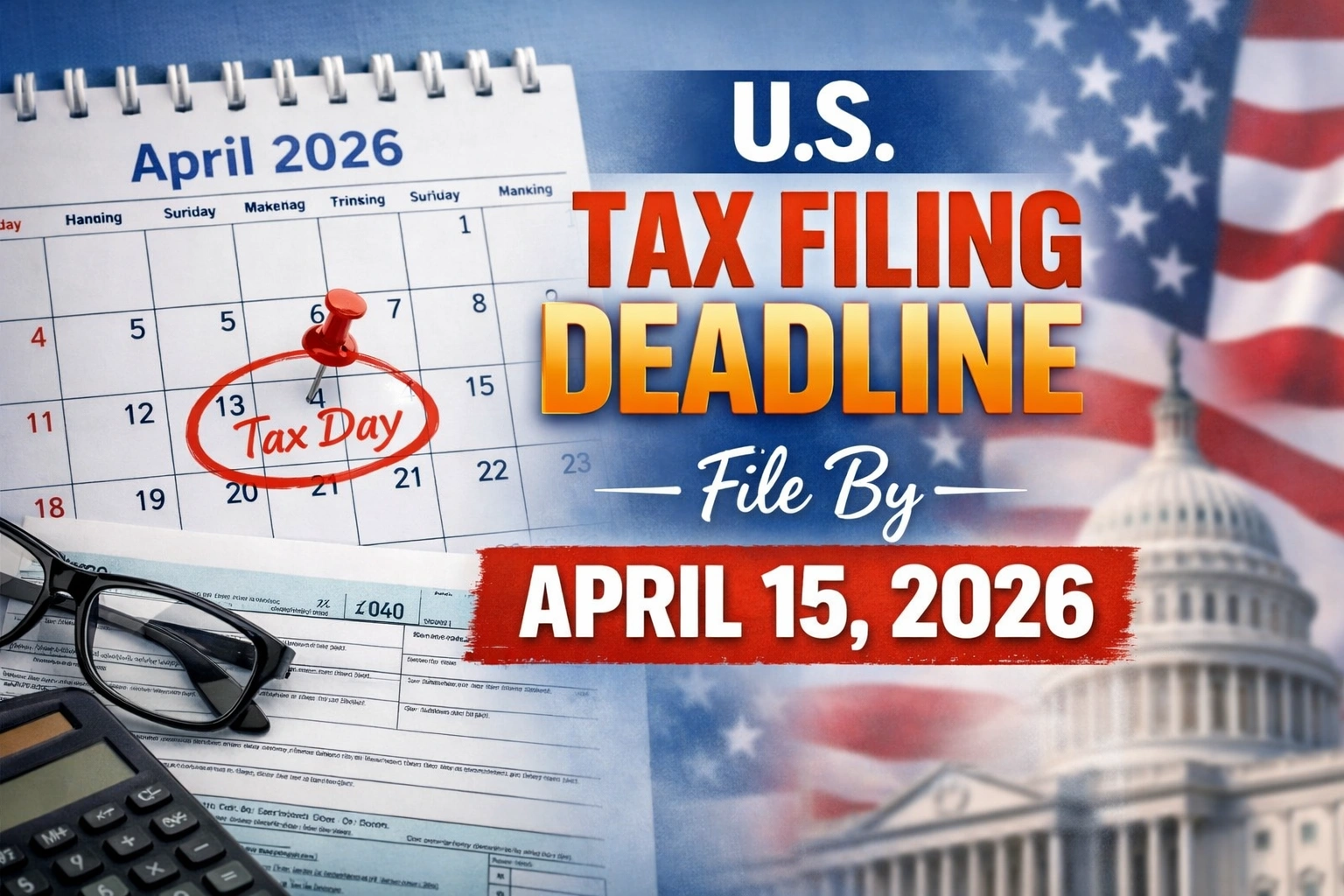
The tax filing deadline in the United States is something almost every working adult has to deal with each year. Still, many people remain unsure about the exact date, what happens if they miss it, and how strict the system really is. As tax season approaches, these questions become more common, especially among first-time filers and self-employed individuals.
What Is the Tax Filing Deadline in the United States
In the United States, the federal income tax filing deadline for most individuals is April 15. This is the final date by which taxpayers must file their income tax return for the previous year. For the 2025 tax year, the deadline falls on April 15, 2026. If this date lands on a weekend or a federal holiday, the deadline is usually shifted to the next working day. This adjustment has happened several times in the past, which is why many people check the date every year instead of assuming it will always stay the same.
The Internal Revenue Service, commonly known as the IRS, uses this deadline to ensure that income taxes are reported and settled in an orderly manner. Filing on time helps taxpayers avoid penalties and also allows the government to process refunds efficiently. People who expect a refund often prefer to file early, while those who owe taxes sometimes delay filing until the last moment. However, delaying too long can create problems.
Why the Deadline Is Such a Big Deal
Missing the tax filing deadline can result in penalties, especially if taxes are owed. The IRS typically charges a late filing penalty that increases the longer the return remains unfiled. Interest may also be added to unpaid tax amounts. Even if someone cannot pay their full tax bill, filing the return on time is still considered important. Filing shows compliance, while payment issues can often be addressed separately.
For those who are not ready by April 15, the IRS does provide an option to request an extension. This extension gives taxpayers additional time to file their return, usually until October 15. However, this does not mean extra time to pay taxes. Any estimated tax owed should still be paid by the April deadline to reduce interest and penalties. Many people misunderstand this rule and assume an extension covers everything, which can lead to unexpected charges later.
Who Might Have a Different Deadline?
Some taxpayers don’t follow the standard April 15 rule:
- Americans living abroad often receive an automatic two-month extension
- Military personnel serving overseas may qualify for extra time
- Disaster-affected areas sometimes receive special IRS deadline relief
- Self-employed individuals must also keep track of quarterly estimated taxes
Each situation is different, so checking IRS guidance for your specific case is important
Certain groups of taxpayers may follow different timelines. Americans living or working outside the country often receive an automatic extension. Military personnel serving in specific conditions may also qualify for additional time. In cases of natural disasters, the IRS sometimes announces special relief measures, extending deadlines for affected regions. These situations are announced officially, and taxpayers are advised to rely only on verified updates.
Self-employed individuals face a slightly different challenge. In addition to the annual filing deadline, they are required to make quarterly estimated tax payments throughout the year. Missing these payments can lead to penalties even if the annual return is filed on time. This makes tax planning especially important for freelancers, contractors, and small business owners.
Many people feel overwhelmed by taxes simply because they wait too long to prepare. Documents such as income statements, bank records, and deduction-related receipts are often scattered or incomplete. Starting early helps reduce stress and lowers the chance of mistakes. Electronic filing has become the preferred method for most taxpayers, as it is faster and reduces processing errors. Refunds issued through electronic filing are also processed more quickly compared to paper returns.
What If You’re Getting a Refund?
Another common concern is refunds. If the government owes a taxpayer money, there is no penalty for filing late, but delays can still cause inconvenience. Refunds are only issued once a return is processed, so filing earlier usually means receiving money sooner. For many households, tax refunds play an important role in budgeting and financial planning.
In the end, the U.S. tax filing deadline exists to create structure and fairness in the system. While it may feel strict, understanding how it works makes it far less intimidating. April 15 is not just a date on the calendar; it is a reminder to stay organized and informed. Filing on time, or requesting an extension when necessary, helps avoid unnecessary trouble and keeps financial records clean.
Forget Bitcoin: 3 Under-the-Radar Assets Experts Are Watching Before February Ends
For most taxpayers, a little preparation and awareness is all it takes to get through tax season smoothly