
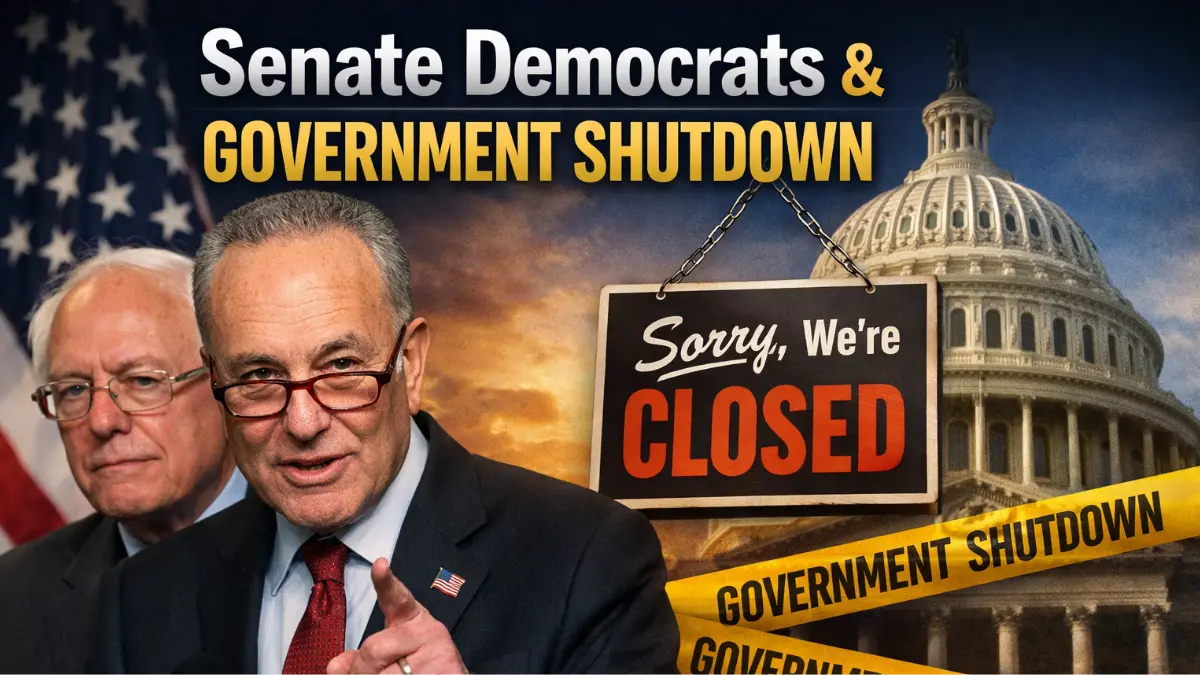
Every time the United States moves closer to a government shutdown, one phrase almost always appears in headlines: “Senate Democrats.” For many readers outside the U.S., this can sound confusing or even misleading. Are Democrats really shutting down the government? Or is the story more complicated than the headlines suggest? To understand this, it helps to look beyond politics and focus on how the system actually works.
How a Government Shutdown Starts
The U.S. government cannot operate without money approved by Congress. Each year, lawmakers must pass funding bills to keep federal agencies running. If they fail to agree before the deadline, parts of the government simply stop working. When that happens, non-essential offices close, federal workers are sent home without pay, and services slow down across the country. This situation is referred to as a government shutdown Shutdowns are not accidents. They happen when political negotiations collapse.
Why the Senate Has So Much Power
The U.S. Senate is different from other lawmaking bodies. Most major bills need at least 60 votes to move forward. This rule gives the minority party real power to block legislation, including budget bills. Because Senate Democrats often control a large voting bloc, their support becomes essential. Without it, funding bills can stall, even if they pass easily in the House of Representatives. This is why Senate Democrats frequently appear in shutdown-related news.
U.S. Tax Filing Deadline Explained: What Every American Should Know Before April 15
Why Senate Democrats Say “No”
When Democrats refuse to back a funding bill, it is usually because of what is inside it. Common disagreements include: Cuts to healthcare, education, or social programs Immigration or border-related funding demands
Defense spending levels Short-term bills that avoid long-term solutions From their point of view, supporting such bills would mean accepting policies they believe hurt ordinary Americans.
Is One Party Really to Blame?
In practice, shutdowns are almost never caused by just one side. Often, one party passes a bill knowing the other party will reject it. The result is political pressure, public blame, and stalled negotiations. Each side frames the story differently. One calls it “fiscal responsibility.” The other calls it “reckless politics.” The shutdown itself becomes a bargaining tool.
Meanwhile, the public pays the price.
Real Impact on Real People
While lawmakers argue, federal employees miss paychecks. Small businesses lose contracts. Travelers face delays. Markets react to uncertainty. These effects are not political talking points—they affect daily life.
Ironically, members of Congress continue to receive their salaries during shutdowns, which only adds to public frustration.
Forget Bitcoin: 3 Under-the-Radar Assets Experts Are Watching Before February Ends
Why Shutdown Threats Keep Returning
In today’s polarized political climate, compromise is risky. Lawmakers fear backlash from their own voters more than the consequences of a shutdown. As a result, budget deadlines turn into political standoffs again and again. When Senate Democrats are named in shutdown headlines, it usually signals a deeper failure of negotiation—not a single party’s decision to “turn off” the government.
The Bottom Line
Linking Senate Democrats to a government shutdown doesn’t mean they alone caused it. It means the system reached a deadlock where cooperation broke down. Shutdowns are symptoms of political gridlock, not proof of one side’s guilt. Until compromise becomes politically acceptable again, shutdown threats will remain part of the American political cycle.